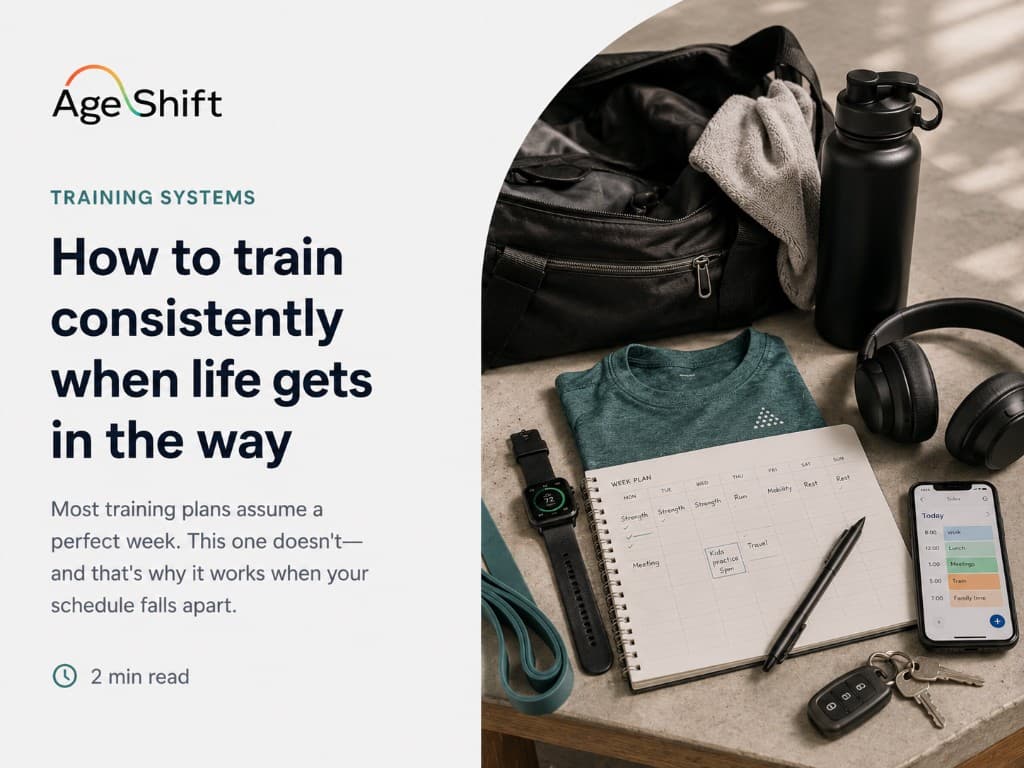
How to train consistently when life gets in the way
Most training plans assume a perfect week. This one doesn't—and that's why it works when your schedule falls apart.

Heinrich Tessendorf
2 min read
Most people don't quit training because they lack motivation. They quit because their plan was built for a version of their life that rarely shows up.
Stop optimizing for the perfect week
A perfect week—eight hours of sleep, open calendar, fresh legs—is a useful benchmark, not a design target. When your plan only works under those conditions, every disruption feels like failure.
Adaptive training starts from a different question: what can you do today, given how you actually feel and what comes next?
That shift changes three behaviors:
- You stop skipping entire weeks after one bad day.
- You stop "making up" missed sessions with random extra volume.
- You keep long-term load trending up without sharp spikes.
Design for friction, not fantasy
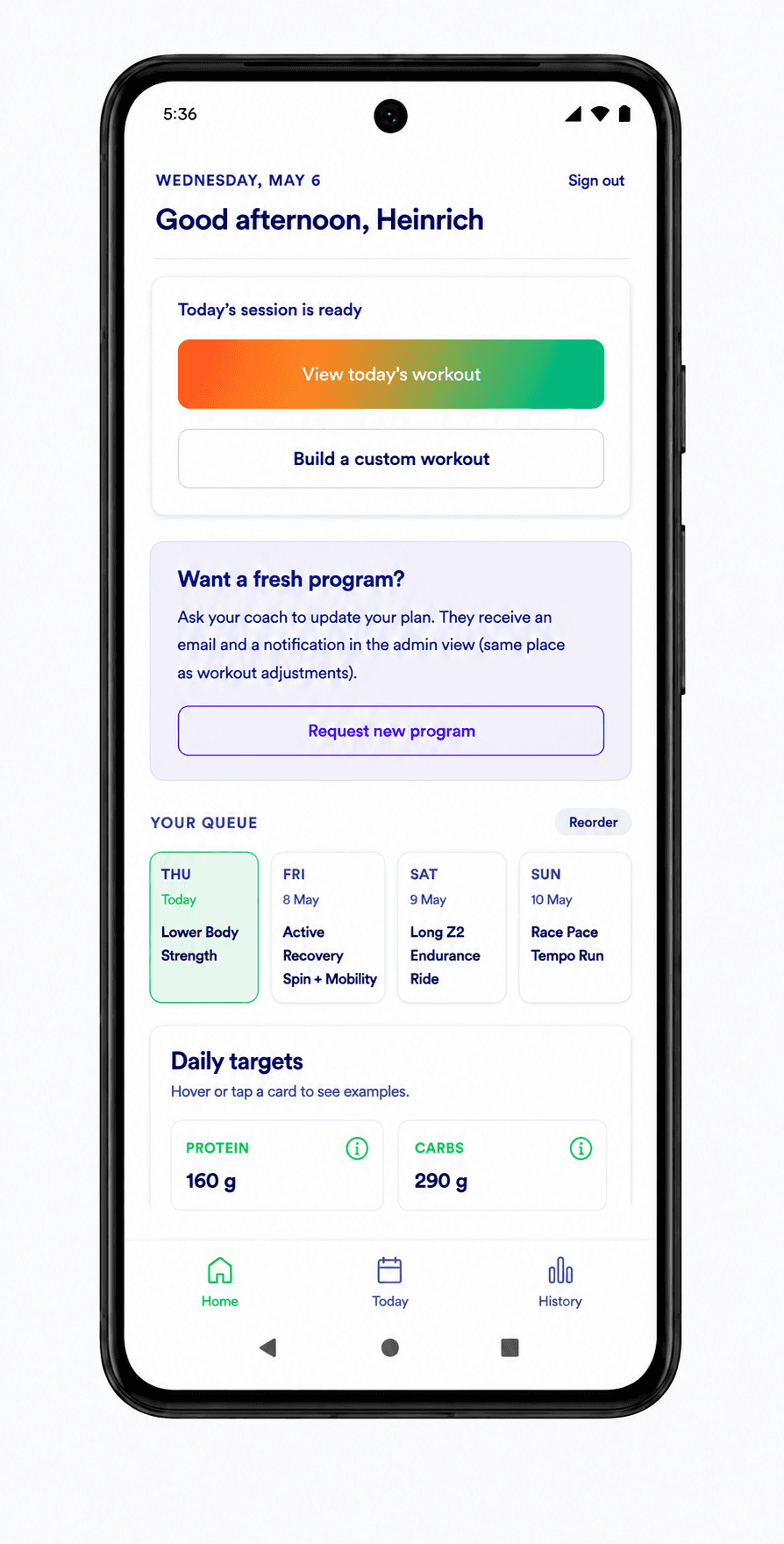
Practical rules that hold up in real life:
- Minimum viable session: define what counts on your worst day (20 minutes still counts).
- Decision budget: fewer choices at the gym; let the system pick variations.
- Forward-looking load: yesterday's work and tomorrow's race both matter today.
The goal is not to win every week. The goal is to stack enough good weeks that capacity compounds.
What to do when the week breaks
When travel, illness, or stress hits, resist the urge to restart from zero. Instead:
- Shrink, don't stop — cut duration and intensity, keep the habit.
- Protect what's next — if you have a long run Sunday, don't bury your legs on Thursday because you "feel guilty."
- Log honestly — poor sleep and pain flags are data, not moral judgments.
The compounding effect
Twelve months of "good enough" weeks beats eight weeks of perfect training followed by a three-month gap. Adaptive systems are built for that math—they trade heroic sessions for durable throughput.
If your program can't survive a messy month, it isn't your program. It's a postcard from a life you don't live.